A lazy engineer under the stars
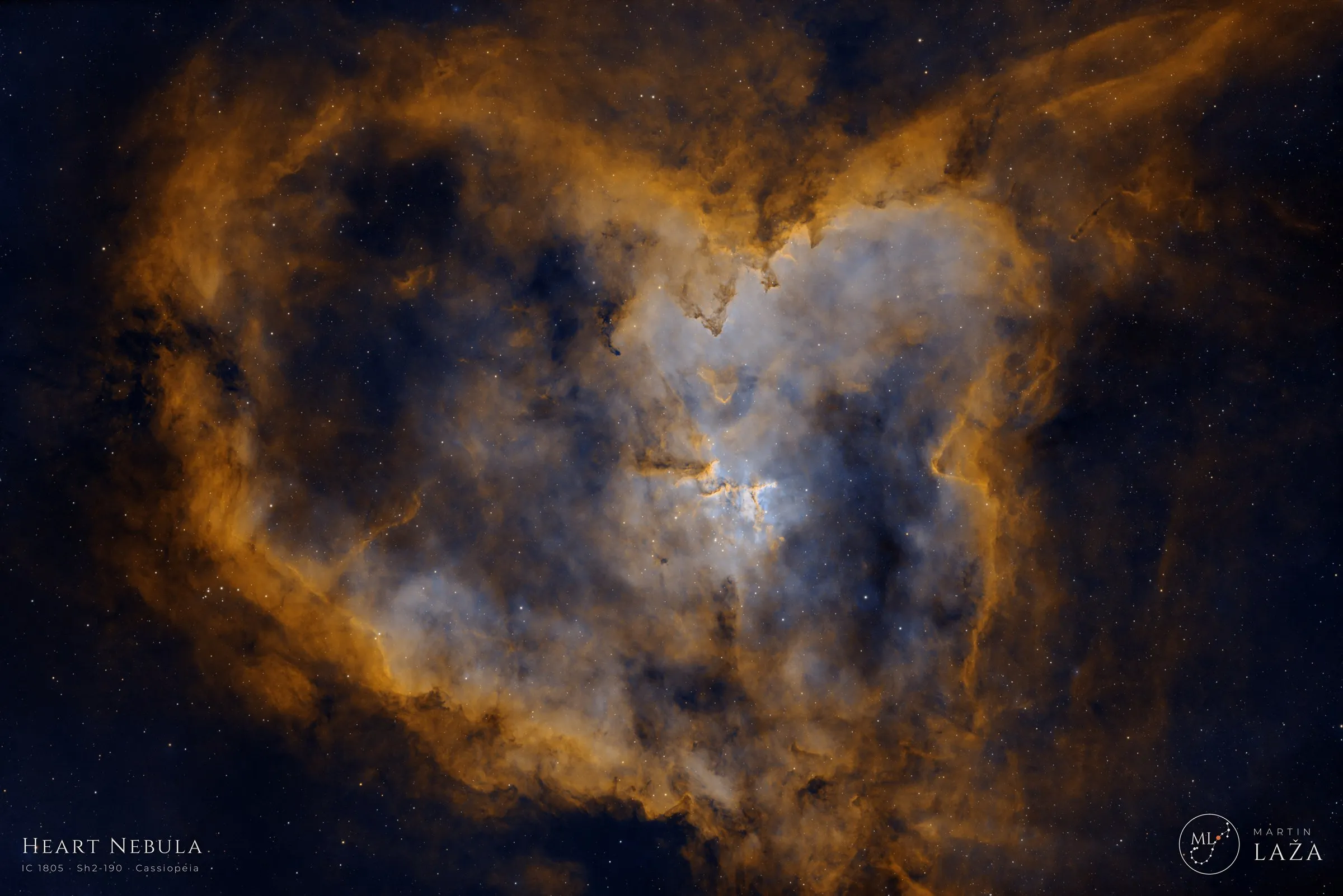
Let me start with a confession: I’m a lazy engineer. Not lazy in the “doesn’t do anything” sense. Lazy in the “would rather spend a weekend automating something than do it by hand twice” sense. And when something breaks, I’d rather open it up than throw it away. Those two traits explain most of this site, so they’re a good place to begin.
Looking up
I’ve always liked the night sky. For years that meant visual astronomy and simple astrophotography with my old Canon EOS 450D, astro-modified so it could see the red glow of hydrogen nebulae that a stock camera filters out. A tripod, then a small mount, long nights, and the first blurry but thrilling pictures of things nobody can see with the naked eye.
The covid boom
Then came covid. Like a lot of people, I suddenly had more evenings at home, and the hobby grew: a proper mount, a cooled astro camera, PixInsight, and nights spent chasing nebulae instead of watching the news. The older pictures in the gallery come from those years: the Rosette, the Horsehead, Markarian’s Chain, the Heart and Soul. Take them for what they are: trials of the gear, usually a few hours of data and fast, quick-and-dirty processing. They show where I started, not what the setup can do.
The quiet years (almost)
After that, things went quiet. Almost. Life happened: we moved, there was a new house and, best of all, a garden. And with the garden came something every astrophotographer dreams of: a proper concrete pier, a solid foundation for the mount that stays where it is and doesn’t need to be set up and leveled every night. Building it is a story of its own, and I’ll write it up in another post.
The mount on that pier is a rescue. I got an iOptron CEM60 for a very good price, and there was a reason for the price: it had the well-known “5-minute spike” in tracking, and its communication with the PC didn’t work. Exactly my kind of bargain. It’s fixed, and it got some upgrades on top: a holder for the mini PC on the DEC axis, and redesigned wiring and power. The repair and the upgrades will each get their own post.
But a pier doesn’t take pictures by itself. In those years I only rarely used my new Player One Poseidon-C camera. Setting up, babysitting the rig and then spending evenings on processing just didn’t fit into life with a new house.
This year: full speed, with help
This year I decided to go full speed again, but differently. I’m a lazy engineer, remember? So the question wasn’t “how do I find more time for this?” but “how much of this can I hand over?”
The answer turned out to be: a lot. I now work with Claude, an AI that writes code, runs scripts and debugs alongside me. Together we’re building a setup where I can:
- look up: plan targets and let the rig in the garden collect light all night;
- sleep: the acquisition PC captures unattended, every frame goes to the NAS on its own, and old nights are cleaned up once they’re safely stored;
- process: calibration libraries, scripted PixInsight workflows and a running record of what worked and what didn’t from one target to the next.
The Heart Nebula at the top of this post is the first image of the new era: one night, 6 hours of light, calibrated with a proper master library and processed carefully in a tight loop with an AI instead of in one rushed evening. It’s not my last word on the target, but it’s the first picture that shows what the new setup can do.
Along the way I built hardware too. The filter wheel on my rig is my own design, and its story, including the mistakes, is on the OpenWheel page.
OpenWheel is only the first bite of a bigger project: Triton. That’s a filter wheel, rotator and off-axis guider with a focuser, all in one super-compact package between the telescope and the camera. More about it soon. Stay tuned.
Why this site exists
Here’s the other confession: I don’t like writing posts or making videos for social media. It always felt like a second job on top of the actual hobby, so it never happened. The images stayed on a hard drive and the projects stayed in folders.
But with Claude, documentation stops being a chore. It’s a side effect of the work. The notes already exist because every session ends with them, and turning them into a post is a conversation, not an evening. This site is the proof: it was built in a few days, it pulls images and acquisition data straight from the FITS headers, and it publishes itself with one command.
So the plan is simple: build it up along the journey. Images when the sky allows, projects when they reach a milestone, repairs of old gear, and honest notes on what worked and what didn’t, including the parts where the AI or I got it wrong.
Coming up next: the concrete pier, the CEM60 rescue and its upgrades, and Triton.
Astro, engineered. Clear skies, and one more thing fixed.